
Hysterectomy Surgery By Dr. Kiran Usman
A hysterectomy is a uterus removal operation. Based on your case and the reason you are undergoing a hysterectomy, the surgeon may remove the cervix and, in some cases, the ovaries along with the fallopian tubes.
You can’t get pregnant once you have had your uterus removed. You will also stop getting periods. At Dr. Kiran’s Gynae Clinic, we evaluate your medical history, assess your uterine condition, and consider your fertility goals before advising hysterectomy.
When Do We Recommend Hysterectomy?
Dr. Kiran doesn’t recommend hysterectomy as first-line treatment for all gynecological issues, unless it’s clinically necessary.
It’s performed under anesthesia and can be an appropriate treatment choice if conservative treatments have failed or you continue to experience symptoms that interfere with your routine life.
Here’s when we may consider hysterectomy.
- Symptomatic uterine fibroids
- Heavy menstrual bleeding
- Adenomyosis causing significant pain and bleeding
- Endometriosis
- Uterine prolapse
- Uterine rupture
- Gynecological cancers
Dr. Kiran may discuss alternative treatments initially. For example, myomectomy might be an appropriate option if fibroid removal is needed while preserving the healthy uterine tissue.
Hysterectomy Surgery Types Available at Kiran’s Gynae Clinic
Here are the types of hysterectomy surgery we perform:
Total Hysterectomy
It’s a complete uterus removal surgery, where the uterus along with the cervix is removed. It’s the most common type.
Partial Hysterectomy
A partial hysterectomy removes just the uterus, leaving the cervix — the cylinder-shaped lower part of the uterus connecting to the top of the vaginal canal — in place.
Radical Hysterectomy
Radical hysterectomy is mostly part of a gynecological cancer treatment plan. It removes the uterus, cervix, surrounding tissues, the upper part of the vagina, and nearby lymph nodes, depending on the extent of the disease.
Hysterectomy with Oophorectomy:
Hysterectomy doesn’t typically require removal of the ovaries. However, ovarian torsion, ovarian cancer, or severe ovarian disease may require ovarian removal in the same operation. The decision is carefully considered, as oophorectomy can cause an immediate drop in ovarian hormones, triggering menopause.
Our Hysterectomy Procedure
A uterus removal operation can be performed with different approaches. Dr. Kiran will evaluate your case and consider your anatomy before determining an appropriate surgical approach.
You will be given general anesthesia, so you can sleep throughout the procedure. In some cases, regional anesthesia may be used to numb your lower back, but it’s less common.
Surgical Approaches
Vaginal Hysterectomy
If only the uterus needs to be removed for less-serious conditions, such as uterine prolapse or fibroids, vaginal hysterectomy is the least-invasive hysterectomy procedure. The surgeon accesses the uterus through a small cut at the top of your vagina.
The uterus is separated from the supportive structures and blood vessels and is removed through the vaginal canal. Since it doesn’t involve abdominal incisions, the recovery is usually faster with a shorter hospital stay.
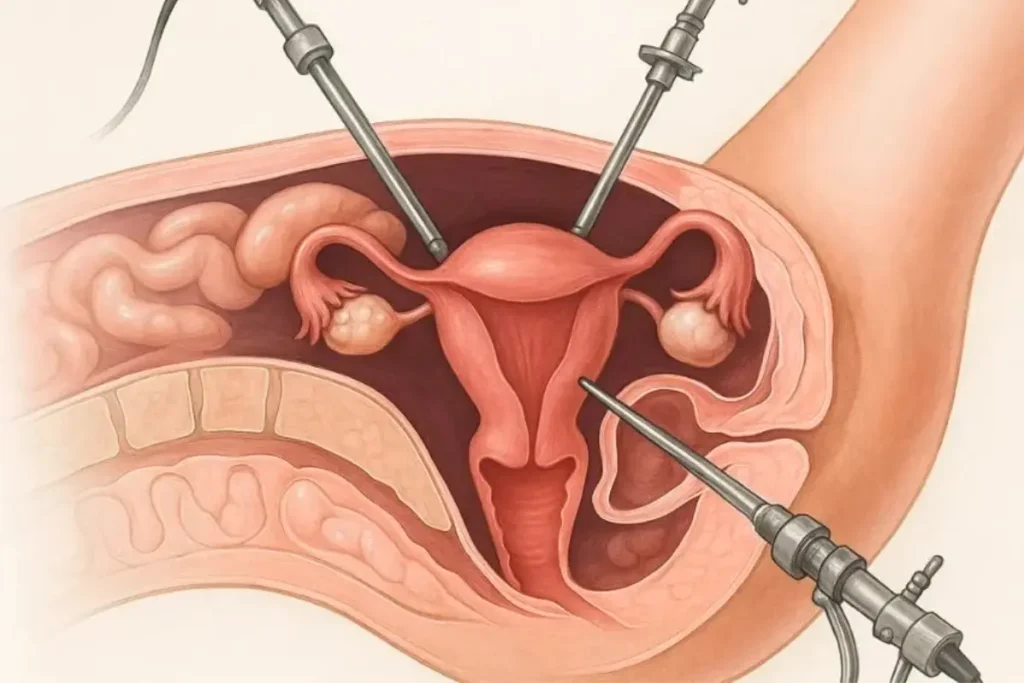
Laparoscopic Hysterectomy
Laparoscopic hysterectomy is a minimally invasive uterus removal surgery, in which the uterus is accessed through multiple small incisions in the abdomen. A thin, lighted tool called a laparoscope is inserted through one incision, and other specialized instruments through other incisions.
These tools detach the uterus and remove it either through one of the incisions or the vagina. Since it’s less invasive than abdominal hysterectomy, you can expect a shorter recovery and less postoperative pain.
Abdominal Hysterectomy
If you have a complex uterine disease, a very large uterus, or a gynecological issue that requires a closer look at your pelvic structure, an abdominal hysterectomy may be a suitable surgical approach.
It’s performed through a single large incision on the lower abdomen. It gives your surgeon a clear picture of your uterus and the surrounding structures. The surgery is, however, considered major and involves a comparatively longer recovery than laparoscopic or vaginal hysterectomy.
Benefits of Hysterectomy
Here's how the hysterectomy procedure can be beneficial:
- It’s a long-lasting solution to heavy and prolonged bleeding due to adenomyosis or fibroids.
- It stops menstruation and associated symptoms permanently.
- It relieves pelvic pressure and pain due to endometriosis, fibroids, and other gynecological conditions.
- It’s a crucial part of treatment for those diagnosed with endometrial or other gynecological cancers.
Risks
Since hysterectomy is a major operation, certain side effects are common after surgery. Possible uterus removal side effects include:
- Vaginal bleeding (usually light and can last up to several weeks)
- Soreness around the incision site
- Fatigue
If ovaries are removed during the surgery, you may enter menopause immediately and may experience additional symptoms, such as hot flashes, night sweats, loss of libido, vaginal dryness, and insomnia.
Uterus Removal Operation Cost
Uterus removal operation cost can vary between patients, depending on whether it’s a total, radical, subtotal, or hysterectomy with oophorectomy. It also depends on the hospital facility, surgical approach, how long you stay in the hospital, and whether additional procedures are needed.

Why Choose Dr. Kiran Usman for Hysterectomy
Choosing a gynecologist for hysterectomy is an important decision, as it may influence your overall experience and recovery. Dr. Kiran Usman, a qualified OB-GYN, fertility expert, and gynecological surgeon, specializes in vaginal, laparoscopic, and total abdominal hysterectomy. She has 15+ years of experience performing uterus removal surgery to address different gynecological concerns.
Dr. Kiran will help you understand the surgical process, benefits, risks, and recovery. If appropriate for your case, she may explain alternative treatments that can be less invasive or are associated with shorter recovery.
FAQS
Frequently Asked Questions
Hysterectomy itself doesn’t cause weight gain, but reduced activity or dietary changes after hysterectomy can affect your weight.
There’s no specific age for hysterectomy. The decision depends on the medical reason, your health, and fertility goals.
It can last 1-3 hours, depending on the surgical approach and the type of hysterectomy surgery.
The surgery itself isn’t painful, but some pain and discomfort are common after surgery, especially around the incision site. Its intensity gradually reduces. Meanwhile, you can take prescribed pain medication to feel comfortable.
Reviews
Our Happy Patiens
EXCELLENT Based on 232 reviews
 Posted on Google
 Yousaf KhanMy wife had her laparoscopic surgery with Dr. Kiran Usman, and everything went smoothly. Dr. Kiran explained the procedure clearly and made her feel comfortable throughout. We truly believe she is one of the best laparoscopic surgeons in Lahore. Highly recommended.Posted on Google
 Abdul RehmanWe visited Dr. Kiran Usman yesterday for my wife’s laparoscopic surgery, and our experience was excellent. Dr. Kiran is very professional, caring, and explains everything clearly before the procedure. We felt completely comfortable throughout the treatment. She is truly one of the best laparoscopic surgeons in Lahore and a very skilled gynecologist doctor in Lahore. The staff at the clinic was also supportive and cooperative. Highly recommended for anyone looking for a trusted gynae specialist.Posted on Google
 Arsh AhmadDr. Kiran Usman is a knowledgeable, professional, and caring doctor. She listens patiently, explains everything clearly, and makes patients feel comfortable throughout the consultation. Her compassionate approach and attention to detail are truly appreciated. I highly recommend her to anyone looking for excellent medical care.Posted on Google
 Muzammil Ali JanSuch a nice doctor.Posted on Google
 Ayesha BasharatSincerely very happy with Doctor Kiran. After just one consultation my issue got resolved and I feel healthy again Alhumdulilah
Patient Experiences
Success Stories
Many women with different gynecological problems and fertility concerns have shared their positive experiences after consulting Dr. Kiran Usman.
Clinic Location
You are just one step away from getting the right guidance and proper care for your fertility or reproductive health concerns. Book an appointment with Dr. Kiran now, and get answers to all your questions.
Clinic Address
Evercare Hospital, D1 Commercial, NECHS Block D 1, Nespak Housing Scheme, Lahore, 54770

Our Location

Evercare Hospital, D1 Commercial، NECHS Block D 1 Nespak Housing Scheme, Lahore, 54770
Copyright © 2026 Dr Kiran Usman